
The Truth About the Sale of the Tucker Property
The Truth About the Sale of the Tucker Property
I had hoped never to write another issue of ARPTalk. I am no longer an Associate Reformed Presbyterian, and I was through with the Associate Reformed Presbyterian Church. However, I guess some members of the Associate Reformed Presbyterian Church are not through with Chuck Wilson.
The sale of church property in Tucker, Georgia, became a cause célèbre at the recent meeting of General Synod when Rev. Harper Price accused the Stewardship Committee (and, particularly, the Chairman, Chuck Wilson) of acting improperly in the sale of the Tucker property. Since Price’s accusation, Rev. Ben Glaser has referred to the action as “ill-gotten gain,” Rev. Andy Webb referred to it as a “scandal,” and others have called it “sin.”
I understand a commission was formed last year by General Synod to investigate the matter of the monies of Second Presbytery. With regard to the sale of the Tucker property, as far as I know, no one on the commission contacted the former Chairman of the Stewardship Committee, any member of the Stewardship Committee, the former Treasurer of Second Presbytery, Rev. Peter Waid, or Cardinal Realty as to events leading to the sale of the Tucker property. The above people are those who have direct knowledge of what transpired. The investigation by the commission was sloppy. I wonder, did they even examine the minutes of Second Presbytery?
For those who are interested, the following is an account of the events leading to the sale of the Tucker property.
Background of the Tucker Church
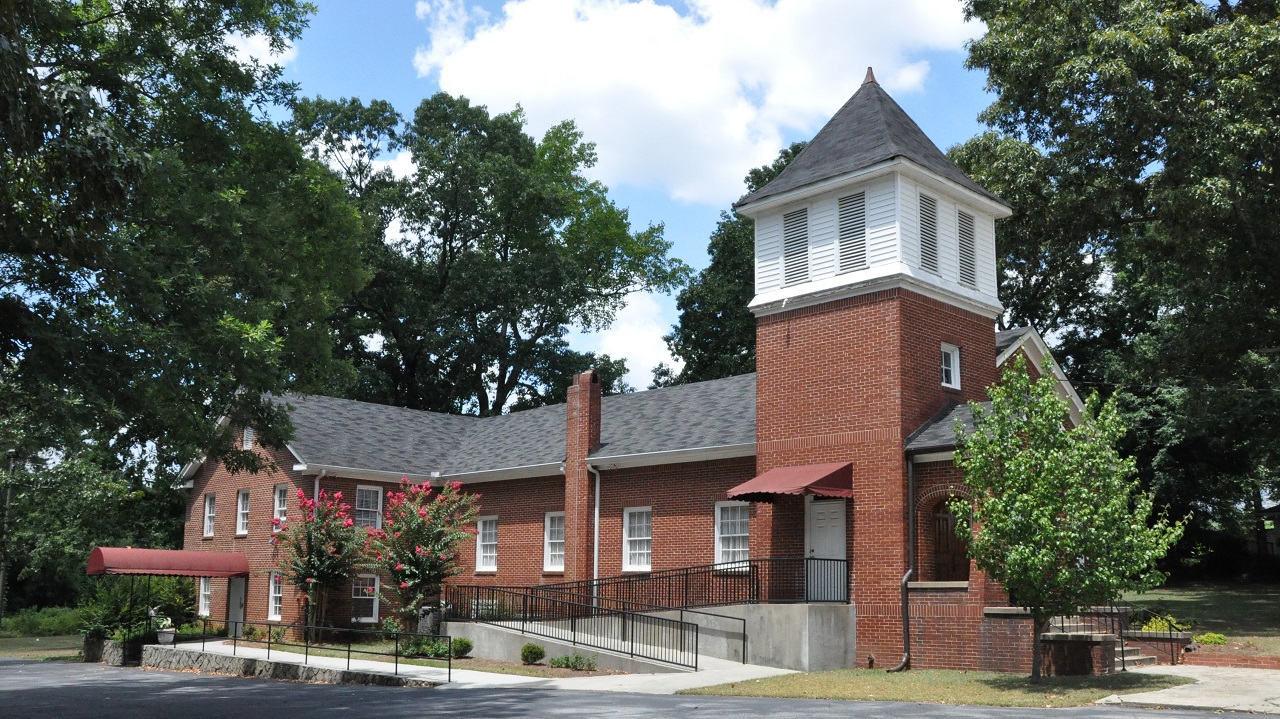
The Tucker church was established prior to World War II. The building was constructed in the late 1930s. At that time, the Tucker community was one of the most desirable communities in the Atlanta area.
At one time, the Tucker congregation was a strong church; however, “white flight” and other socio-economic changes resulted in the community becoming an ethnic melting pot. Unwilling to relocate and unable to adapt to a changing ethnic mix, the Tucker church became a “white island” of older congregants who drove in from other communities to attend church services.
After 2000, the decline of the congregation’s membership became critical, to the point that attendance was minuscule and some session members declined with age to the point of inability to attend meetings and to comprehend and remember events. And, the word “declined” is used not to disparage (for I am 80), but to describe the situation as gently as possible.
The congregation was closed (1) at the request of the congregation and in concurrence with the opinion of the acting Moderator of the Session; and (2) by Second Presbytery in accord with a motion from the Minister and His Work Committee.
At this point, by action of Second Presbytery, the Tucker property was put under the care of the Stewardship Committee for oversight and/or disposition.
Condition of the Property
Constructed in 1938/39, the Tucker church had fallen into disrepair. The building needed a new roof, the basement flooded when it rained and needed a drainage system, the electrical wiring was so dangerous that the stove in the kitchen was a fire hazard and the whole building needed rewiring, and we also discovered that someone had constructed and attached a septic line to the sewage line of the City of Tucker to avoid sewage fees. The problems and repairs were daunting.
Prior to the Tucker Church matter, Second Presbytery engaged Cardinal Realty, Greenville, SC, to sell the properties of Second Presbytery. On its own, Second Presbytery was unable to sell the many properties the presbytery held—nor did the presbytery manage the properties well. Once Cardinal Realty was engaged, the properties were sold—some quickly, some not so quickly.
It was the unanimous opinion of the Stewardship Committee that the Tucker property be sold as quickly as possible. No one wanted to bury money in repairs.
The Sale Process
Cardinal Realty erected a “For Sale” sign. As I remember, the asking price was $595,000.
The Westminster Presbyterian Church (PCA), Atlanta, wanted the property for a church plant. The church planter called me. He wanted special considerations. I informed him that Second Presbytery had a sales contract with Cardinal Realty, and he needed to deal with our agent.
In the meantime, a “bidding war” ensued. The mosque across the street from the Tucker property wanted the property for a parking lot. A businessman (with a Palestinian-sounding name) also wanted the property. His desire for the property was such that he was prepared to buy the property “as is” and without inspection. He was prepared to write a personal check for $640,000, which was $45,000 more than our asking price. His bank verified he was able to write such a check for $640,000.
Immediately, we proceeded to a contract with the man. A contract was signed electronically. Then, surprisingly, after the signing of the contract, the people involved with the church plant of Westminster Presbyterian Church made an offer of $675,000, contingent on a 60-day inspection—and that most certainly would have involved repairs to the property before they would sign a contract.
Please note: the offer from the people involved with the PCA church plant effort came after a contract was in place.
No action in the sale was done without the unanimous consent of the Stewardship Committee. No action was taken without the approval of Second Presbytery. Second Presbytery gave carte blanche to the Stewardship Committee to sell the property. There was no directive forbidding the sale of the property to anyone.
Response to Recent Allegations
Rev. Harper Price’s ignorance of the events in the sale of the Tucker property is the result of his failure to attend meetings of Second Presbytery. As we remember, no one at the time joined Price in his outrage at the sale of the property.
Rev. Harper Price was not pleased with selling the property to a Muslim businessman. However, (1) once a contract to sell is signed with a real estate agent, (2) once the agent erects a “For Sale” sign, and (3) the seller and the real estate agent cannot specify that the property is not available to a certain race or religion. There are laws against such an action.
The man who purchased the property was willing to pay above the asking price, and he was willing to take the property as it was, even with its need for expensive repairs.
I suppose some may say that we jumped at the sale. Well, maybe we did. However, the hard work of dealing with the property issues, the hours of phone calls, and the time spent on travel by volunteers was substantial, and none of us received a penny for our efforts. We gave our time and money as a cup of cold water.
Of course, the agent received his commission, but no one in the presbytery received any compensation. To make it clear, for some have asked about a “kick back,” there was no “kick back.”
Conclusion Regarding the Sale
In conclusion, in the sale of the Tucker property, nothing was done that was illegal, unethical, untoward, or nepotistic. Every action was taken with oversight by and approval of the Stewardship Committee and Second Presbytery. The confusion at General Synod was the result of Price’s ignorance of the situation or his unwillingness to accept the sale of the Tucker property based on his Islamophobia.
For those who are interested in the sale of the Tucker property, here’s the story. If you want to talk to me, my phone number is (864) 882-6337. The phone number of the former Treasurer, Rev. Peter Waid, is (864) 590-7691, for Mr. Waid helped in the writing of this article.
For those who are interested, we invite investigation. We have nothing to hide.
Observations About the Direction of the ARP Church
Now, as we close, we would like to make one observation: the Associate Reformed Presbyterian Church has become an ecclesiastical culture of suicide.
Instead of using the monies of Second Presbytery (which were designated for church planting by Second Presbytery), the monies are spread like fertilizer in a hay field. Church planting is hard and expensive, demanding focused preservation of resources.
The challenge of the Director of Outreach North America to the General Synod this year was for each presbytery to plant one new church a year for ten years. Now, that’s a reach!
In their engagement in an ecclesiastical culture of suicide, the General Synod begins by helping the Presbyterian Church plant a new church in Tucker, GA, to the tune of $650,000, based on a false narrative. Does anyone see the irony?
Emblematic of this ecclesiastical culture of suicide is World Witness. By its stated purpose, World Witness is in the business of planting churches on the mission field for other denominations—not the Associate Reformed Presbyterian Church.
Finally, the irony of allocating two million dollars to Erskine Theological Seminary for church planting is astounding. Did anyone ask these questions:
(1) In recent years, has an Erskine Seminary graduate successfully planted an Associate Reformed Presbyterian congregation?
(2) Does anyone on the Erskine faculty have practical knowledge of successfully planting a church?
(3) Is anyone at Erskine Seminary excited about the project of a program on church planting?
Final Thoughts
Our question is this: How far behind the former Tucker church is the Associate Reformed Presbyterian Church?
These are our thoughts,

Charles W. Wilson

Peter A. Waid